Heterogeneous UAV–UGV Autonomy
HERCULES re-architects the AirSim / Cosys-AirSim SimMode layer to enable concurrent operation of unmanned aerial vehicles (UAVs) and unmanned ground vehicles (UGVs) within a single simulation session. In stock AirSim, each session is restricted to a single vehicle type because of a physics-engine conflict between the multirotor and ground-vehicle models; HERCULES resolves this so that drones and Huskies can be spawned, controlled, and logged together in the same world.
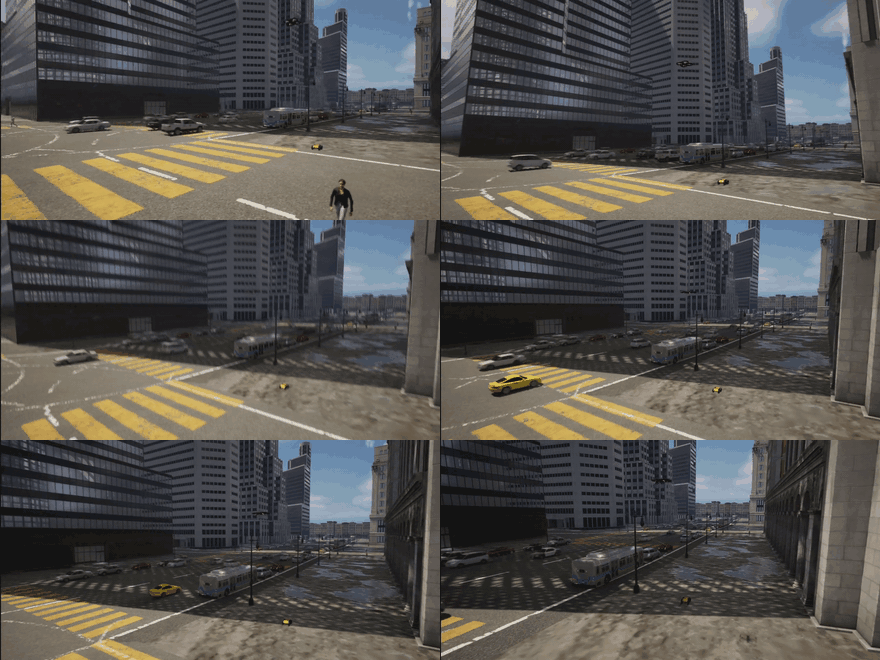
Unified autonomy stack
On top of concurrent operation, HERCULES adds the components needed to make large-scale outdoor heterogeneous experiments practical:
- Unified waypoint-level command interface. UGVs are commanded through the same high-level waypoint interface as UAVs, so exploration and coordination research can target both platforms with one API.
- Autonomous waypoint-tracking UGV controller. A novel controller drives the ground vehicles along generated trajectories, mirroring the UAV interface.
- End-to-end planning pipeline. Offline trajectory generation produces kinodynamically feasible motion for both platforms, including complementary coverage and leader–follower trajectory patterns for dataset collection.
- Coordinated multi-robot sensor logging. Synchronized, per-robot logging of all sensor streams across the team.
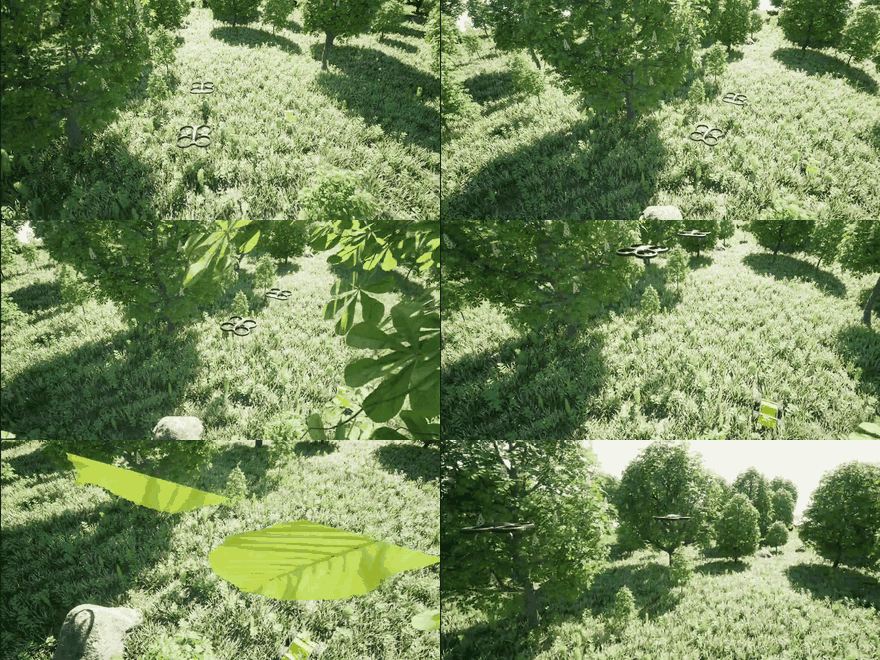
Vehicles
HERCULES uses the multirotor drone model for UAVs and the skid-steer vehicle model (ClearPath Husky) for UGVs. See Multiple Vehicles and Settings for how to declare a mixed team, and the ROS 2 wrapper for integrating your own planners and estimators.
Note
The heterogeneous stack builds on the vehicle and SimMode infrastructure inherited from Cosys-AirSim. See the Skid Steer Vehicles and Car Mode pages for the underlying ground-vehicle models.